
I arrived on Dave Van Ronk’s doorstep just as he reached the high-water mark of his interest in ragtime guitar,  so I emerged from my year of study with “St. Louis Tickle,” “Maple Leaf Rag,” “The Entertainer” (which was so overdone that I quickly forgot it), and Jelly Roll Morton’s “The Pearls.” (I don’t think Dave had yet composed his own contribution to the genre, “Antelope Rag,” but it followed in the next couple of years.)
“The Pearls” may have been my favorite — though audiences never got as excited about it as they did about “Maple Leaf,” so I played it a good deal less. I was not familiar with Morton’s piano version at the time, so Dave’s guitar arrangement was the first way I heard it, and it was so damn pretty, with neat chords and interesting harmonies. Morton was  Dave’s favorite composer and one of his favorite musicians, alongside Duke Ellington and Louis Armstrong.
Dave would later say he worked out these piano rags as research projects to improve his understanding of the guitar, and that was certainly part of it, but there was also some pride involved. He was trying to get off the road and make his living from teaching, and he wanted to feel like he was the kind of guitarist an ambitious young student might want to study with, even in the musical mecca of Manhattan — and, damn it, he was the acknowledged pioneer of classic ragtime guitar and wanted to justify his reputation.
That had gotten a lot harder by the mid-1970s, because like many pioneers he had inspired a wave of followers who didn’t have to labor under his handicaps — starting with his own lack of predecessors, but also a clumsy right hand that kept tripping him up, since he was a natural lefty. Dave Laibman and Eric Schoenberg had credited him on their debut LP, which was the first full album of ragtime guitar instrumentals, but soon a bunch of players came along who were only marginally aware of his contribution. He was particularly taken with the Dutch guitarist  Ton Van Bergeyk, and also Leo Wijnkamp, and then I introduced him to Guy Van Duser’s work, which led him to begin musing about the unique affinity Dutch and Dutch-American guitarists seemed to have for ragtime… until his lady, Joanne, broke in to point out that he had about as much Dutch ancestry as he had Cherokee.
I later got to know Leo, met Ton a couple of times, and took one lesson from Guy, but I continue to particularly like Dave’s arrangements, because they both feel and sound like something a guitarist would naturally play. Most classic ragtime guitar arrangements sound to me like attempts to play piano compositions on an instrument that has too few strings — like Dr. Johnson’s hind-leg-walking dog, one is impressed that it can be done at all, not because the results sound particularly pretty. Dave’s arrangements always sounded pretty — and when I finally heard Morton’s piano recording, I was struck by how much of it he had managed to translate into guitar language, and reasonably simple guitar language at that.
 money behind him, and hopes that he might get a hit that would break him beyond the bar and coffeehouse circuit and make life a little easier (for more on this, check out my post on “
 although this rococo Roy-Rogers-on-mescaline cowboy song was the only item of Stampfeliana that remained in his repertoire in later years, that was because the others required more accompaniment than his guitar — for example, the avant-garde art-rock cacophony of “
 hoping for at least a modest hit, but the last of those had been in 1973 and now he was with Philo, a small Vermont folk label, and although he was proud of the music he was making, it was clear he wasn’t going to get out of his one-bedroom apartment with its windows on an airshaft, and not entirely clear how he’d manage the rent on that.
 sold a gazillion records with it.
 had the requisite world-weariness, and was a good actor and terrific storyteller, and I can imagine his gruff whisper being perfect for this role.
 just a weird kid with too much nervous energy and a scratchy voice. Dave and his wife Terri Thal were major boosters for the kid, mentoring him, finding him jobs, and teaching him songs.
 The melody was from a song called “The Young Man Who Wouldn’t Hoe Corn,” which I’m assuming Dylan, like everyone else, got from Pete Seeger, who recorded it in the mid-1950s on an album of frontier ballads.
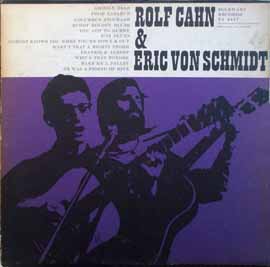 a duet LP with Rolf Cahn for the Folkways label that has not been treated well by history but was a seminal source for the folk-blues revivalists of the early 1960s. His source was a singer and guitarist named Smith Casey or Smith Cason, or possibly Smith Carson, who was recorded by John Lomax for the Library in 1939 at the Clemens State Prison Farm in Brazoria, Texas. In the LOC files it was titled “
 arrangement that turned a fairly generic blues lament into something great and enduring. Play his version back to back with Dylan’s, and the only difference is that Dylan’s is one of the many good but ultimately forgettable folk-blues songs he was singing in 1961-62, while Dave’s is a masterpiece.
 had just followed my own inclinations. For example, I ended up with three Bo Carter albums, though I was never a huge fan of his music. I liked his playing and singing, and some of his songs, but he was the master of double-entendre novelty blues lyrics, which got tiresome after a while. All things being equal, I would have been more likely to gravitate toward Walter Davis or Roosevelt Sykes… but all things weren’t equal: he was a guitarist and they were pianists, and the reissue market was very guitar-centric.
 during
  Following my generally archaeological inclinations, I didn’t get around to those until I’d laid in a stock of prewar stuff, and the first Blue Goose albums I bought were of
 was their source as well as Johnson’s, and I’ve added some lyrics from Jordan, but it’s still Johnson’s voice I hear in my head when I think of it.
 I’m gonna have your ma
 Dave he steered me to his actual source: the Bahamian Blind Blake and his band from the Royal Victoria Hotel in Nassau. It is obviously related to a song recorded in the late 1920s by James “Stump” Johnson, Tampa Red, and others as “The Duck’s Yas Yas,” and that discographic primacy has led a lot of scholars to describe Blake’s song as a variant of Tampa Red’s. However, Blake’s lyric shares only the opening verse of the Red/Johnson version, and since his repertoire is full of turn-of-the-century minstrel survivals like “My Name is Morgan, But It Ain’t J.P.” and “Watermelon Spoilin’ on the Vine” (as well as the sole surviving version of a bloodthirsty minstrel masterpiece, “
 fascinating. Much as I love a lot of old recordings, they are simply snapshots, frequently unrepresentative, from a huge pool of material people were singing in the early 20th century. Van Ronk still came up in a world where songs were often learned from other singers rather than from records, or from records he had only heard a couple of times and vaguely remembered. That was a disadvantage in a lot of ways, but also gave his generation a degree of freedom — they couldn’t remember how the “original” version went, exactly, so they had to do the best they could, and the result was sometimes better than the assiduous imitations that became more prevalent by my time, when we all had the old records on reissue LPs and could study them with infinite care.
 Dillinger verse, it’s an anachronism. My guess is that the verse itself is older and Dillinger replaced an earlier protagonist, but that’s just a guess — if other people want to credit Blake with writing a whole new set of verses and turning a relatively generic blues song into a cohesive comic creation, the evidence supports their guess at least as well as mine.)
 sometimes didn’t, but pretty much all the players acknowledge his unique gifts: not only his superb guitar playing, rack harmonica work, and singing, but the way he always made the songs seem personal and quirky. He is an assiduous student of the old masters, spent the requisite years painstakingly hovering over scratchy 78s, figuring out how Blind Lemon Jefferson or Blind Willie McTell played a particular lick, but no matter how loyally he tried to capture their styles, his own individual touch and sensibility remain instantly recognizable.
 “Oh, yeah, that’s from the Bahamian Blind Blake. He’s got a lot of great material: that’s where I got ‘
 it dates from the first decade of the twentieth century, but so far no one has found sheet music or any other solid example before Blake recorded it circa 1950, and there’s no way to know how much it had changed over the years.
 “whetted butcher knife,” which made more sense — but a few years ago this became a hotly debated topic on a blues scholar list-serve and Yuval Taylor eventually solved the mystery: Wade & Butcher was the most popular brand of straight razor, the weapon of choice for minstrel-show comedy.