
Dave Van Ronk had numerous musical heroes, but Jelly Roll Morton was number one. Over the years, I got used to the idea that if I stayed late enough at his place we would likely end up listening to Morton records (often back to back with Phillipe Koutev’s Bulgarian ensemble), and it was an addiction I was happy to share. We often listened to the  Red Hot Peppers recordings — by some standards the first examples of jazz that was both carefully arranged and brilliantly swinging — but in terms of Dave’s repertoire the most significant Morton record was an album recorded in 1939 as a commercial follow-up to his Library of Congress sessions, featuring Morton alone at the piano and titled New Orleans Memories. It was reissued on LP in the 1950s with one side of instrumentals and one of Morton singing. There were five songs on the latter side, all of which Dave played, and eventually I learned them as well, in roughly equal parts from Dave and Morton.
“Buddy Bolden’s Blues” was a descriptive title for a song Morton credited to Bolden, who led one of the defining New Orleans jazz bands at the turn of the twentieth century. As he explained at the Library:
This is, no doubt, is the earliest blues that was the real thing. That is a variation from the real barrelhouse blues. The composer was Buddy Bolden, the most powerful trumpet player I’ve ever heard or ever was known. The name of this was named by some old hunky-tunk people. While he played this, they sang a little theme to it.
 That theme, “funky butt, funky butt, take it away,” has often been glossed by jazz historians as a reference to farting, possibly because the historians were more comfortable with pre-adolescent naughtiness than with adult sexuality. Bolden was famous for the audience of prostitutes who patronized his dances, and everyone in that world seems to have associated the “funk” in his lyrics with the strong smell of female bodies after a long night’s work. In my book, Jelly Roll Blues, I quote a brilliantly imagined recreation of Bolden’s performances from the New Orleans musician and historian Danny Barker:
Lots of folks would faint and pass out from the heat and the strong body odor, ‘cause there wasn’t many colored people who had bath tubs in those days.  In fact, very few white folks owned one. Lots of times when the crowd would be jammed in front of Bolden he would stop blowing, take his hat and fan the air in front of him and holler loud:
“MY CHILLUN’S HERE. I KNOW IT ‘CAUSE I CAN SMELL ‘EM.”
That used to tickle the crowd, and everybody would clap, scream, laugh and holler. I’m tellin’ you, when that odor used to rise it smelled like burnt onions and train smoke…
Zora Neale Hurston recorded a variant of this song in Florida, with a verse that made that theme explicit:
I’m so glad the law is passed,
The women in Tampa got to wash they ass.
This was a key song in Dave’s history, because it was a standard part of his repertoire in the late 1950s (though the only recording was unissued until the Mayor of MacDougal Street CD),  and he expanded it in the early 1960s into a guitar transcription of the classic ragtime composition, “St. Louis Tickle” — the first full transcription of a piano rag to guitar, which inspired generations of ragtime guitarists. Morton always insisted that the main strain of “St. Louis Tickle” was stolen from Bolden, and I’m guessing it was this connection that led Dave to work out the rest of the composition, first as a solo piece, and then in an string band arrangement for his Ragtime Jug Stompers. He would go on to arrange several other piano rags, including Morton’s masterpiece, “The Pearls” — which I’ve covered in another post, along with numerous Morton pieces I picked up from Dave: “Mamie’s Blues,” “Winding Ball” (a.k.a. “Winin’ Boy”), “Michigan Water,” and “Sweet Substitute.”
 so I emerged from my year of study with “
 Dave’s favorite composer and one of his favorite musicians, alongside Duke Ellington and Louis Armstrong.
 Ton Van Bergeyk, and also Leo Wijnkamp, and then I introduced him to Guy Van Duser’s work, which led him to begin musing about the unique affinity Dutch and Dutch-American guitarists seemed to have for ragtime… until his lady, Joanne, broke in to point out that he had about as much Dutch ancestry as he had Cherokee.
 money behind him, and hopes that he might get a hit that would break him beyond the bar and coffeehouse circuit and make life a little easier (for more on this, check out my post on “
 although this rococo Roy-Rogers-on-mescaline cowboy song was the only item of Stampfeliana that remained in his repertoire in later years, that was because the others required more accompaniment than his guitar — for example, the avant-garde art-rock cacophony of “
 hoping for at least a modest hit, but the last of those had been in 1973 and now he was with Philo, a small Vermont folk label, and although he was proud of the music he was making, it was clear he wasn’t going to get out of his one-bedroom apartment with its windows on an airshaft, and not entirely clear how he’d manage the rent on that.
 sold a gazillion records with it.
 had the requisite world-weariness, and was a good actor and terrific storyteller, and I can imagine his gruff whisper being perfect for this role.
 just a weird kid with too much nervous energy and a scratchy voice. Dave and his wife Terri Thal were major boosters for the kid, mentoring him, finding him jobs, and teaching him songs.
 The melody was from a song called “The Young Man Who Wouldn’t Hoe Corn,” which I’m assuming Dylan, like everyone else, got from Pete Seeger, who recorded it in the mid-1950s on an album of frontier ballads.
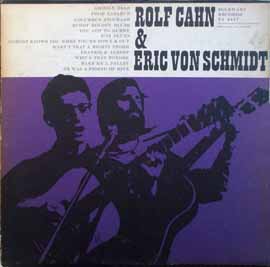 a duet LP with Rolf Cahn for the Folkways label that has not been treated well by history but was a seminal source for the folk-blues revivalists of the early 1960s. His source was a singer and guitarist named Smith Casey or Smith Cason, or possibly Smith Carson, who was recorded by John Lomax for the Library in 1939 at the Clemens State Prison Farm in Brazoria, Texas. In the LOC files it was titled “
 arrangement that turned a fairly generic blues lament into something great and enduring. Play his version back to back with Dylan’s, and the only difference is that Dylan’s is one of the many good but ultimately forgettable folk-blues songs he was singing in 1961-62, while Dave’s is a masterpiece.
 had just followed my own inclinations. For example, I ended up with three Bo Carter albums, though I was never a huge fan of his music. I liked his playing and singing, and some of his songs, but he was the master of double-entendre novelty blues lyrics, which got tiresome after a while. All things being equal, I would have been more likely to gravitate toward Walter Davis or Roosevelt Sykes… but all things weren’t equal: he was a guitarist and they were pianists, and the reissue market was very guitar-centric.
 during
  Following my generally archaeological inclinations, I didn’t get around to those until I’d laid in a stock of prewar stuff, and the first Blue Goose albums I bought were of
 was their source as well as Johnson’s, and I’ve added some lyrics from Jordan, but it’s still Johnson’s voice I hear in my head when I think of it.
 I’m gonna have your ma
 Dave he steered me to his actual source: the Bahamian Blind Blake and his band from the Royal Victoria Hotel in Nassau. It is obviously related to a song recorded in the late 1920s by James “Stump” Johnson, Tampa Red, and others as “The Duck’s Yas Yas,” and that discographic primacy has led a lot of scholars to describe Blake’s song as a variant of Tampa Red’s. However, Blake’s lyric shares only the opening verse of the Red/Johnson version, and since his repertoire is full of turn-of-the-century minstrel survivals like “My Name is Morgan, But It Ain’t J.P.” and “Watermelon Spoilin’ on the Vine” (as well as the sole surviving version of a bloodthirsty minstrel masterpiece, “
 fascinating. Much as I love a lot of old recordings, they are simply snapshots, frequently unrepresentative, from a huge pool of material people were singing in the early 20th century. Van Ronk still came up in a world where songs were often learned from other singers rather than from records, or from records he had only heard a couple of times and vaguely remembered. That was a disadvantage in a lot of ways, but also gave his generation a degree of freedom — they couldn’t remember how the “original” version went, exactly, so they had to do the best they could, and the result was sometimes better than the assiduous imitations that became more prevalent by my time, when we all had the old records on reissue LPs and could study them with infinite care.
 Dillinger verse, it’s an anachronism. My guess is that the verse itself is older and Dillinger replaced an earlier protagonist, but that’s just a guess — if other people want to credit Blake with writing a whole new set of verses and turning a relatively generic blues song into a cohesive comic creation, the evidence supports their guess at least as well as mine.)