
This is an excellent example of the kind of material that has always been popular in all-male environments — cattle drives, merchant and naval ships, army barracks —  except a lot of that material is sexual or misogynist, while this is just brutally realistic, matching its language to the setting and circumstance. (Which is to say: WARNING! Raw language ahead.)
I heard this from Glenn Ohrlin, a legit cowboy and one of the funniest people I’ve ever met, and recall singing it for my traveling companion, Jasper Winn, as we rambled through Hungary in 1988. I’d known Jasper for ten years at that point and traveled with him over much of Europe, but as far as I recall he’d never mentioned horses, so it was startling to discover that he was an accomplished rider even by Hungarian standards, which are about as high as it gets. We were hoping to get horses and do some  traveling that way, which didn’t work out, but we did visit a bunch of cowboys out on the puszta, the Hungarian prairies. They used a kind of saddle that was just a pad with stirrups, with no cinch under the horse’s belly. If you put your foot in one stirrup to mount, you pulled the saddle off the horse’s back — which meant I couldn’t mount, period. Jasper’s solution was to raise one leg and flow onto the horse, a technique he’d picked up for riding bareback. The Hungarians considered this to be cheating — their technique was to reach across the horse’s back and grab the opposite stirrup leather, balancing the weight of their foot in the near stirrup — but they were impressed.
 So anyway, we were talking about horses a lot, which reminded me of this song, and I sang it for Jasper, and he declared it the most realistic cowboy song he’d ever heard, which was good enough for me. (He went on to spend years traveling to horse cultures around the world, riding and writing about them, and I wish he’d do a book about those adventures. Instead, he’s been doing books on paddling a kayak around Ireland and negotiating the English waterways.)
This song was written by Curley Fletcher as a parody of his own poem, “The Strawberry Roan.” Some Hollywood writers had added a chorus to the poem, which he hated, and he responded by writing this sequel using their chorus, which then got recorded as a “party record” by the Sons of the Pioneers. Their version is somewhat different from Ohrlin’s, and I have no idea which is closer to Fletcher’s original. In any case, the castration version quickly became popular in oral cowboy culture — the combination of raw humor, clinical detail, and the boss’s final comeuppance were irresistible.
 In his anthology of cowboy lyrics, The Whorehouse Bells Were Ringing, Guy Logsdon explains that Fletcher wrote the original poem in 1914 and although he was known for writing dirty parodies of his own songs, no one recalls hearing this one until the 1940s. Before that he was apparently doing a different parody, a sixteen-verse saga that graphically reworked the original theme of a cowboy confronting a particularly vicious horse, ending:
I lays in the mud, its the end of the trail,
Old Strawberry turns and he lifts up his tail,
For I was the loser, went down in disgrace,
And now that it’s over, he shits in my face.
In case anyone finds this material offensive, I would note Jasper’s comment when I first sang it, which is that he knew an older horsewoman back in Ireland who was thoroughly respectable and would never tolerate bad language, but had supervised enough gelding operations that she would enjoy this song. Cowboys were romantic enough, in their way, but it was in their way… and Fletcher addressed that issue in another poem, variously called “The Open Book,” “The Open Ledger,” and other titles. You can find it online, but the opening verses kind of sum up the theme:
You’ve been tamped full of shit about cowboys,
They are known as a romantic band,
Bold knights of the saddle, who herd the wild cattle,
And roll cigarettes with one hand.
Now according to song and to story,
He’s a sheik in a ten-gallon hat.
All he knows of romance is the crotch of his pants.
What the hell do you think about that?
For other, less graphic, versions of the cowboy legend, check out my pages on “Zebra Dun” and “The Killer.” Or to dig deeper into the issue of folklore censorship, check out “Big Rock Candy Mountain.” Meanwhile, here’s a picture Jasper took of me with my standard traveling rig during that trip through Hungary.
And, to finish up… 
Jasper writes:
Several years later I went back to the Hortobagy and met the same horsemen…. The big changes in Hungary have brought big changes to the traditional life of the Hortobagy, and it’s getting harder and harder to interest youngsters – even the sons of herders and horsemen – in a life which mostly revolves around being too hot or too cold for long days and sitting around watching a bunch of animals eat grass. The shows of old horsemen skills liven up life for them a bit and bring in some money but the traditions are becoming pretty showbiz at that point. Then again, what showbiz. The Puszta Five – a whip-cracking guy standing on the back of two galloping horses whilst driving another three in front of him – the Roman riding of circuses – had grown into the Puszta Twelve when I was last out there doing stories on that kind of thing.
 One piece I worked on that winter was Tommy Johnson’s “Big Road Blues,” or at least my approximation of it. I always loved Johnson’s singing, and at times have named him as my favorite of the classic Delta blues guitarists in the circle around Charlie Patton. His music has a lightness I don’t hear in other Delta players, while retaining the rhythmic complexity and emotional depth.
 There was also a spectacular version on Yazoo’s Jackson Blues anthology, by an obscure Delta musician named Willie Lofton who called it “Dark Road Blues” and out-did Johnson at Johnson’s own style, playing with ferocious speed and power and punctuating his vocal lines with a gorgeous falsetto.
 the years, and one year he brought him to my place in Cambridge for dinner. At that point I was dating a woman who played concert harp, and my fondest memory of that evening is Brewer seated at her harp, exploring its possibilities and eventually picking out some gospel tunes. Later we got out guitars, and he played a blazing version of “Big Road,” using a technique I’ve never seen before or since: where I (like everyone else) snap the low 6th string, he reached into the soundhole with his thumb and snapped the 5th and 6th, in that order, in a roll with the 4th picked by his index finger. I tried and tried, but can’t get that move up to any kind of speed — when he did it, it was like a drum-roll, and the power was incredible.
 I also played it pretty regularly during my 1987-88 winter residency in Sevilla, Spain — unquestionably my hardest-working period as a blues player. I was in Sevilla with some friends from Antwerp, Vera Singelyn,
  Tuesday in another, and so on. He’d also named us the Mississippi Sheiks, which felt weird to me since I’d never been in Mississippi and that name was already taken by one of the great groups of the 1920s… but Juan liked it, and he was the boss.
 the 1970s called La Pata Negra, mixing flamenco with Jeff Beck-style electric leads. (For a taste, check out their “
 As for the Seaboard railroad lines, they were part of a network that reached down to Florida, over to New Orleans, and up to New York. In The Warmth of Other Suns, Isabel Wilkerson writes about the Seaboard as one of the main engines of the Great Migration, which adds another dimension to the song.
 In the mid 1980s Vera Singelyn was running a place in Antwerp that provided cheap rooms and dinners for street people and buskers, and she had a four-month-old son, Liam. He was a pretty tranquil kid but one evening he started crying just as she was trying to dish out food for a couple of dozen people, so I picked him up and bounced him, and when he kept crying I asked Vera if I could carry him around the block…
 That was also where Liam made his debut as a clown — by then, he knew that when Vera put on make-up she would be going out, so he would start screaming, and that afternoon we dealt with the situation by making him up as well and bringing him along. I waited till Vera had a crowd around her, then released him, and he ran over to her hat, picked it up, carried it around the circle, and made a small fortune in coins… then went back to the center of the circle, dumped the coins on the ground, picked up two handfuls, and started distributing them to the other children in the crowd.
 at the Caffe Lena in Saratoga, and he stayed with me whenever he was in Cambridge, and I stayed with him in Spokane and later in Grass Valley. He was genuinely a gentleman and a scholar, and one of his fields of scholarship was the old west. This song was inspired by the name of one of the main cattle trails out of Texas, pioneered by Charlie Goodnight and Oliver Loving in the 1860s, which went up through New Mexico to Colorado and eventually Wyoming.
 ago, I had the pleasure of watching a salesman marketing aceite de vibora.
 soup kitchen that was a dinner stop and occasional lodging for much of the itinerant musical population. I don’t remember how I first met Vera, but it was probably at Den Billekletser, because that was where a lot of us called home during the daytimes. It was a bar on the Hoogstraat, near the banks of cafes surrounding the Cathedral, and we would start drinking coffee there in the morning, graduate to beer around noon, and continue through the evening between sorties to play the cafes, restaurants, and bars. Some people got their mail delivered there, and for ten years or so I would go there first whenever I hit town and find out who else was around and where they were living.
 It’s also possible that I met Vera at the Musik Doos, which was in a couple of different locations over the years and had a stage and microphones for whoever wanted to play a set and pass the hat. Etienne, the owner, was always good to me and I made a lot of friends there. Or maybe someone just brought me over to the place Vera was running to have some dinner.
 waifs and wastrels, and shortly she was letting me live in an apartment on the third floor of a house she had at Huikstraat 5, in the red light district. As I recall, Irish Tony and Jimmy were on the second floor, and Montana Bob and his daughter were on the fourth – or maybe Bob and his daughter had the other side of the third and
  terraces in the daytime, and then Nick and I would get together and do the nice restaurants. We’d typically warm up by playing a standard in all twelve keys, and “Some of These Days” was one of our favorites, along with “
 great new introductory verse, and that got me singing it again, usually with my wife Sandrine on clarinet. Now I need to get back to Antwerp and try it again with Nick, whom I haven’t played with in almost thirty years — but see
  rarer on the busking scene. So I hit Paris, dropped in at
  didn’t allow buskers. We’d go in and ask if we could play, and they’d say no, and we’d make a deal: we’d do one song, and if they didn’t want to hear another we’d leave without bothering the customers for money. So they’d grumble a bit, but give us a chance….
 None of which connects directly to “Hello, Mary Lou,” except that I was working on my rock ‘n’ roll oldies repertoire and when I went out alone I played this as well as the Everly and Holly songs, and had a nicer guitar arrangement for it. I learned it off a record by Gene Pitney, which I picked up at a yard sale for next to nothing back in my teens — the hit version was by Ricky Nelson, but Pitney wrote it and I liked his version. It wasn’t as fancy as “Town without Pity” or “The Man Who Shot Liberty Valance,” but more fun.
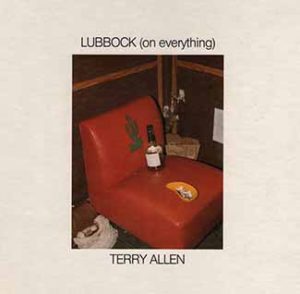 first I thought of him as a quirky novelty writer and it took a couple of years before I immersed myself in that album. Thirty years later, it’s still a relatively little-known (though widely acknowledged) classic, and anyone who hasn’t heard it should just go out and buy a copy.
 broadcasting over XERF in 1963 and in the early years concealed his identity, refusing interviews and photographs. Station promos showed a drawing of a hip wolf, or photographs of a hirsute face of uncertain ethnicity, eyes hidden behind dark shades. He broadcast from midnight till 4am, and could be
  heard all over the Central and Western United States, and sometimes as far away as Europe. He played current hits, deep blues, grinding R&B, howled along with favorite records, sometimes called a lady friend live on the air, and was worshiped by millions of teenagers as a mysterious creature of the night.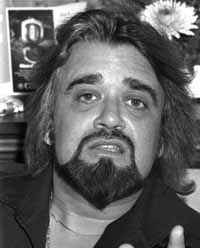
 Ellen Steckert and Milt Okun, and for a long time I forgot about it because after I got into Woody Guthrie, Cisco Houston, and blues I tended to dismiss the songs on those albums as pseudo-folk juvenalia. I don’t remember when or why I revised my opinion — maybe I heard someone like Ian Tyson sing it — but anyway it became one of my favorites, especially when
  Another poster on that Mudcat thread cleared up a long-running geographical conundrum: the list of rivers in Randolph’s lyric includes the Natchez, which isn’t a river and isn’t in Texas, and Hinton, who was a Texan (born in Oklahoma, but raised in Crockett, TX), adapted that to Nacogdoches, which is in Texas but still isn’t a river (and doesn’t scan with the melody). However, the Mudcatter points out that there is a Neches River which flows through more than 400 miles of Texas. So the hired hand presumably sang “Neches” and Carlisle, being more familiar with Mississippi towns than Texas rivers, misheard it as “Natchez” — which doesn’t explain why Hinton, who grew up 30 miles from the Neches and would have had to cross it to reach Nacogdoches, didn’t make the correction.
 Nameless Coffeehouse that week or the next, I went down and heard him, and he was great. So I introduced him to Bill Morrissey and he became one of the gang, hanging out with me and Bill at Jeff McLaughlin’s house and various other places.
 long-running Saturday morning favorite, Hillbilly at Harvard. Our model was the Maddox Brothers and Rose, whose old radio broadcasts had recently been reissued by Arhoolie. We’d kid around and play songs, which meant working up new material every week, and we didn’t set the world on fire, but it was good practice.
 the Streetcorner Cowboys, with Robbie, Peter, me, Mark Earley on harmonica, and Matt Leavenworth showing up pretty often to sit in on fiddle. And then Peter moved to Austin, and the rest may be history, but not this history.
 The first verse, my oldest great-grandson, he made that himself, and from that each child would say a word and add to it. To tell the truth, I don’t know what got it started… but it must have been something said or something done. That’s practically how all my songs I pick up.
 My ride dropped me in Belize City around mid-afternoon, and I wandered the streets looking for someplace cheap to stay. In those days the town looked like a rundown Caribbean port in an old movie: lines of battered, close-packed houses with carved wooden balconies sagging in the tropical heat. I was directed to a Chinese hotel that was like the place Bogart met Tim Holt and Walter Huston in Treasure of the Sierra Madre — the “rooms” were just cubicles separated by chicken wire, each with a cot and not much else. It looked thoroughly uncomfortable, and a fan at the end of the hall was doing nothing to combat the heat, so I gave it a pass.
 I’d never known the words, since I’d only heard it done by Spence, who tended to mumble more than sing. So that was a nice surprise. They sang:
 As for Spence, I’ve written about him in posts for “