
I got this from Dave Van Ronk’s first album — once again, it was the kind of violent, bragging song that perfectly suited the tastes of a teenage boy who was getting into blues. Dave had learned it from Bessie Smith’s recording, and had the bright idea of combining her lyric with the guitar part from Scrapper Blackwell’s “Down South Blues” — I didn’t make that connection until very recently, because when I used to listen to Dave’s first record I had not yet heard the Blackwell song. Dave introduced me to that one as well, when he recorded it on Sunday Street in the 1970s, and toward the end of his life he tended to use it as his regular opening number. And, when I got my hands on some live recordings from the 1950s, I found he’d already been singing it back then — but for his album debut he apparently decided to come up with something unique by melding the Smith song with the Blackwell chart.
That exegesis is not particularly germane to my version, since I sing it in a different key, and in any case I didn’t know about Blackwell at the time — I just knew it was a deep, dark, exciting blues, and the title song of Dave’s album (not, as it happens, of the original issue, or even the second issue, but  Folkways kept repackaging that baby, and I got the Black Mountain Blues version). Of course, I became a big fan of Blackwell later on, and should have made the connection, but Dave always spoke so poorly of that album — he referred to it as “Archie Andrews Sings the Blues” — that I didn’t go back and listen. Which was stupid, because I liked it a lot when I was a kid and there were good reasons for liking it. Dave had not yet formed his mature style, on either guitar or voice, but at his best he was already very effective on both, and had good taste in songs, and some of the performances hold up just fine.
Others hold up less well… but who am I to talk? I am forever grateful that I don’t have a recording of me doing this song at age fourteen, because I remember the ferocious, shouting passion I used to summon, and prefer to recall that feeling rather than hearing the undoubtedly ridiculous reality… and, forty years later, it’s still a lot of fun to do.
(Incidentally, the over-the-neck move I do in the last line is pure Josh White, and much of what I play elsewhere is impure Josh White. Dave and I shared an enduring debt to Josh, and affection for his playing and singing.)
 Rock ‘n’ roll LPs were either hit anthologies or teen-idol pin-up souvenirs, destined to be mooned over by adoring fans, not listened to as serious collections of great tracks. (A few rockers also made LPs for the adult market, separate from their teen hits, but they were people like Connie Francis and Pat Boone.) Or they were simply attempts to cash in on transitory popularity, with a couple of hits and a lot of filler.
 our clothes and swimming, our bodies outlined by glowing bio-luminescent creatures (the motion of your swimming sets them off, and it’s like you were surrounded by fireflies).
 went on to have hits with Billie and Lilly and Freddie Cannon…
 after school and listening to Sha Na Na. My first reaction was to get snooty and annoyed: I was up in my room with my folk records and my acoustic guitar, and the pounding basslines were an intrusion on my precious little world. But at some point, somehow, I started to listen and got hooked.
 twelve of the fourteen songs on that record, complete with the nonsense-word back-up vocals.
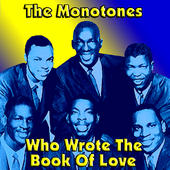
 back to the story, I wasn’t satisfied with Sha Na Na, and began tracking down all the original versions of the songs I liked. It was a perfect moment to do that, because there was a decent oldies station in town, WROR, and ads on TV for mail-order K-Tel anthologies and cheap packaged sets at Woolworth’s. So pretty soon I had “Book of Love” by the Monotones, and all the other songs by the Crests, the Rays, the Chords, the Five Satins, the Diamonds, the Earls, and that led me to enduringly great groups like the Drifters (both versions), the Clovers, and of course the Coasters — but that went way beyond doo-wop.
 but also relative obscurities like Buddy Holly’s “Love’s Made a Fool of You” and the Coasters’ “When She Wants Good Lovin’.”
 Drifters’ greatest hits album a couple of years later — the first Drifters, with Clyde McPhatter singing lead, not the later group that recorded “Under the Boardwalk” and “Save the Last Dance for Me.”
 practiced a similar strategy when he moved me along from Woody and Cisco to blues. I don’t remember exactly when he taught me “Drop Down Mama,” but it was pretty early and the version he taught me was dazzlingly simple: just tune into open G and play a series of descending barres on the 5th, 3rd, and 1st frets, then stick on the 5th and 7th for the C and D chords. I remember him telling me to use my ring finger rather than my index finger for the barre, I’m not sure why, but probably to get a muffled, thumpy sound. He also turned me on to the
  Tom Rush record that was his source for this song and the basic arrangement, and I liked Rush’s voice and went on to get his first two Elektra albums, which were sources for some of my favorite songs…
 typical of a world of African American music that was already very old at the dawn of recording, and predates anything that came to be called blues. Its structure is somewhat similar to songs like “
 to a great extent because banjos were easy to make. (A
  European dance tunes, and one of the most prominent classical guitar instructors was a black player and composer, Justin Holland — and as soon as Sears Roebuck made relatively cheap guitars available by mail order, they became common throughout the southern countryside. It is not clear how many rural guitarists learned to read music or were influenced by the playing of nice young ladies and gentlemen who took formal lessons on the instrument, but the fact of that influence is clearly demonstrated by the ubiquitousness of “Spanish Fandango” among black and white players throughout the rural South.
 (In Europe in the 1970s, the comparable piece was
  the beach at Waikiki, and that charmingly odd locution, “We’ll all get together, spend a little while/ Walking down that little old church aisle” — which I recall singing as “orchard aisle” for several years before I figured out what he was saying.
 were always his pop and ragtime numbers, and I
  conference in London — I had briefly joined the Workers League, the US affiliate of the British Workers Revolutionary Party, which had split from the Socialist Workers Party in a schism led, in part and not coincidentally, by Dave and Terri Van Ronk. That was one of the largest crowds I’ve ever played for, and “San Francisco Bay” brought down the house and made me think I could maybe actually do this for a living.
 guitar intro. Like “Sweet Home Chicago” on the blues scene, it was popular in part because its title city had romantic associations for a lot of people — thanks in part to Kerouac and the beats, San Francisco was a fabled haunt of Bohemia, and became the main West Coast branch of the folk-blues revival. If anyone I knew, from my leftist uncle to my favorite musicians, went out to the West Coast, it was pretty much taken for granted that they’d go to Berkeley or San Francisco, so the song had an added romantic appeal beyond its cheery melody and the neat way Fuller’s words fit together.
 recall once attempting the first album, and the relief I felt when I got to “So Long, Marianne,” because at least it had some energy.
 songs I never would have attempted otherwise, including “Suzanne.”
 summer camp, because I was an American guitar player and could sing Dylan songs, and blues, and “Suzanne,” which was a huge hit in France, in French, for Graeme Allwright — and which would even have had romantic possibilities, if I had been just a tiny bit more daring. And when I went over to Europe a couple of years later to earn my living as a player, I continued to have this one handy for French fans.
 for the first time, before we really knew each other, and complimented me by saying I reminded her of Leonard Cohen — which I had heard before, and generally understood to mean I couldn’t carry a tune — I factored in the fact that she was French and took it as a compliment. Which said, one of the many, many things I love about her is that she has never asked me to play “Suzanne.”.